
No reviews yet. Be the first to share your experience!
BPC 157 Capsules Compounded
 Medically reviewed byCharles Glatz, B.S.Pharm., CCPCompounding Pharmacist · Last reviewed October 28, 2026

BPC-157 is a synthetic 15-amino-acid peptide. CareFirst Specialty Pharmacy compounds BPC-157 oral capsules in 500mcg and 1000mcg strengths. You may purchase BPC-157 capsules from CareFirst Specialty Pharmacy with a valid prescription from your prescriber.
Start by selecting a form for your price
StrengthSelect a form first
QuantitySelect a strength first
Price: as low as $49.95
Please Note: Due to market volatility, prices are subject to change. Please contact us for the most current pricing.
Ready to Move Forward?
Select the action that best fits how you'd like us to handle the prescription.
This medication requires a prescription.
To process your order we will require a prescription from you or your Prescriber. We will only compound and dispense upon receipt of a valid patient specific prescription.
- Your prescriber can mail or fax in the prescription
- You can mail in the original prescription
- We can contact your prescriber for you
- You can transfer your prescription from another pharmacy

Are you a licensed Prescriber?
Choose the option that best fits how you’d like to send scripts or connect with us.
Fax Your Prescription
Fax (800) 786-1405 or (844) 922-7379 and we’ll process it right away.
Phone In
Call our pharmacists at (844) 822-7379 with prescription details.
Request More Info
Complete the prescriber form and we’ll follow up quickly.
Email Our Team
csr@cfspharmacy.com for questions, refills, or status updates.

Looking for a Different Strength?
Pharmacy Info
We are a nationally accredited PCAB compounding pharmacy and a .Pharmacy verified website. A verified .Pharmacy website designation ensures our patients and prescribing partners that our website is verified and safe.
https://safe.pharmacy/buy-safely/?url=cfspharmacy.pharmacy
Drug Description
Actual product image may vary.
Product Info
Compounded BPC-157 oral capsules prepared to your prescriber’s specifications by CareFirst Specialty Pharmacy, a PCAB-accredited 503A compounding pharmacy licensed to dispense in all 50 states. Available in 500mcg and 1000mcg strengths with a valid prescription.
Key Facts
| Dosage form | Oral capsules |
|---|---|
| Strengths | 500mcg and 1000mcg — Get Quote for additional strengths |
| Quantity | 30, 60, 90, or 100 capsules |
| Prescription | Required (patient-specific) |
| FDA status | Not FDA approved (see regulatory status below) |
| Ships to | All 50 states |
Key Takeaways
- BPC-157 is a synthetic 15-amino-acid peptide based on a sequence found in a protein in human gastric juice.
- It can be compounded as an oral capsule. Interest in the oral route comes from animal research on the peptide’s stability in the stomach environment.
- Most BPC-157 research has been done in animals. Human data is beginning to emerge.
- BPC-157 is not an FDA-approved drug. Its compounding status changed significantly in 2026 (see the timeline below).
- Your prescriber decides the strength and schedule.
What Is BPC-157?
BPC-157 stands for “Body Protection Compound-157.” It is a pentadecapeptide, which means a short chain of 15 amino acids. Its sequence was derived from a larger protective protein identified in human gastric juice, and the version used in research and compounding is made synthetically.
Because it is a peptide, BPC-157 belongs to the same broad family of compounds as other peptide medications we compound, such as oxytocin. Peptides are made of amino acids linked together, and many are naturally broken down by digestive enzymes. That is why the question of oral use comes up so often with BPC-157 specifically.
Can BPC-157 Be Taken Orally?
Yes, BPC-157 can be compounded as an oral capsule. Unlike many peptides, BPC-157 originates from a protein found in the stomach, and published animal studies have examined how stable it is in gastric juice.
What that research does not tell us is how well oral BPC-157 is absorbed in people, or how oral and injectable forms compare in humans. Those questions have not been answered by well-designed human trials. When you see claims online that oral BPC-157 “works” or “doesn’t work,” keep in mind that neither statement is supported by strong human evidence yet.
Oral BPC-157 vs. BPC-157 Injections
Prescribers choose a route based on the patient, the goal, and practical factors. Here is how the two forms compare in general terms:
| Oral capsules | Injectable (subcutaneous) | |
|---|---|---|
| How it’s taken | Swallowed | Injected under the skin |
| Needles and supplies | None | Syringes, alcohol swabs, sharps disposal |
| Preparation | Ready to take | Usually requires reconstitution or careful handling |
| Research base | Mostly animal studies | Mostly animal studies |
| Who decides | Your prescriber | Your prescriber |
For many patients, the practical appeal of capsules is simple: no needles, no mixing, and an easier daily routine. Whether capsules are the right choice for you is a decision to make with your prescriber.
What the Research Shows, and What It Doesn’t
BPC-157 has been studied for decades, but almost entirely in laboratory and animal models. A 2025 peer-reviewed literature and patent review in Pharmaceuticals summarized a large body of preclinical work on how the peptide behaves and noted that few side effects have been reported in those studies.
Human evidence is much thinner. Published human data are limited to small studies, including a retrospective report involving 12 patients and an early-phase safety study in healthy volunteers whose results have not been fully published. During its 2026 review, FDA scientific staff described the available studies as too short and too small to establish safety or effectiveness.
- What we know: BPC-157 has a large preclinical research base and has been studied by several routes, including oral.
- What we don’t know: optimal human dosing, how well oral forms are absorbed in people, long-term safety, and how BPC-157 interacts with other medications or conditions.
This is why CareFirst does not make treatment claims about BPC-157, and why your prescriber’s guidance matters.
500mcg vs. 1000mcg: Choosing a Strength
CareFirst compounds BPC-157 oral capsules in two strengths: 500mcg and 1000mcg. We don’t recommend doses. Your prescriber chooses the strength, how often to take it, and for how long, and those directions will appear on your prescription label.
If your prescriber needs a strength we don’t list, we can prepare a custom quote.
BPC-157 and the FDA: Where Things Stand in 2026
BPC-157’s regulatory status has changed more in the past three years than most compounded ingredients change in a decade. Here is the timeline:
| Fall 2023 | FDA placed BPC-157 in “Category 2” of its interim list of bulk substances, a category for ingredients with potential safety concerns that compounders should not use. |
|---|---|
| April 2026 | BPC-157 and eleven other peptides were removed from Category 2 after their nominations were withdrawn. |
| July 23–24, 2026 | FDA’s Pharmacy Compounding Advisory Committee (PCAC) voted 8–6 to recommend adding BPC-157 to the Section 503A Bulk Drug Substances List. |
| October 28, 2026 | HHS issued a notice exercising “enforcement discretion”: FDA will not pursue legal action against compounding pharmacies and physicians making six peptides (BPC-157, KPV, TB-500, MOTS-c, Epitalon, and Semax), even though they are not yet on the 503A Bulk Drug Substances List. These are the same six peptides the PCAC recommended in July. |
| Next | Formal rulemaking on adding BPC-157 to the 503A Bulk Drug Substances List continues separately and is not affected by the October notice. |
What enforcement discretion means, and what it doesn’t
Enforcement discretion means FDA has said it will not take legal action against 503A pharmacies and physicians that compound BPC-157 under the terms of the notice. It does not change the underlying law.
- It is not FDA approval. BPC-157 remains legally an “unapproved drug.”
- It does not add BPC-157 to the 503A Bulks List. That decision still depends on the separate rulemaking process.
- It is an interim policy. HHS can revise or withdraw it later.
Some details of the notice, including the specific sourcing, certification, and adverse-event reporting conditions pharmacies must meet, and whether every dosage form is treated the same way, have not yet been confirmed.
Two points stay true regardless of where the rulemaking lands:
- BPC-157 is not an FDA-approved drug, and no compounded medication is FDA approved.
- The source matters. A licensed, accredited pharmacy compounding from a prescription is held to very different standards than a website selling vials labeled “for research use only.”
For background on the July 2026 advisory vote, see Recent Developments on Peptide Use & Approval.
“Research Peptides” vs. a Compounding Pharmacy
Search for “buy BPC-157” and you’ll find plenty of websites selling powders and capsules labeled “not for human consumption.” Those products are not prepared under pharmacy standards, are not dispensed against a prescription, and are not checked by a pharmacist for your situation.
When you fill a prescription with CareFirst Specialty Pharmacy:
- Your medication is compounded for you, by a licensed pharmacy, from a patient-specific prescription.
- We are a PCAB-accredited 503A compounding pharmacy licensed to ship to all 50 states.
- A pharmacist reviews your prescription and is available to answer questions.
- Our quality processes are documented on our Commitment to Quality page.
Safety Considerations
Because human safety data are limited, talk with your prescriber before starting BPC-157, especially if you:
- Are pregnant, planning a pregnancy, or breastfeeding
- Have a current or past cancer diagnosis
- Take other prescription medications or supplements
- Have a chronic medical condition
Report any unexpected symptoms to your prescriber. Our pharmacists are also available at 844.822.7379 to answer questions about your compounded medication.
How to Get BPC-157 Capsules from CareFirst
- Talk with your prescriber. They decide whether BPC-157 is appropriate and which strength to prescribe.
- Send us the prescription. Your prescriber can fax, phone in, or e-prescribe to CareFirst Specialty Pharmacy (Mount Laurel, NJ · NCPDP #3151266). You can also register as a patient or transfer a prescription, and we can contact your prescriber for you.
- We compound and ship. See How to Order and Shipping Info for timelines and delivery options.
Prescribers: visit our Prescribers page to send scripts or request more information.
Frequently Asked Questions
Can you take BPC-157 orally?
Yes. BPC-157 can be compounded as an oral capsule. It was derived from a protein in human gastric juice, and animal studies have explored its stability in the stomach, which is why the oral route has been studied. Human data on oral BPC-157 are limited.
Does oral BPC-157 work as well as injections?
There isn't enough human research to say. Comparisons between oral and injectable BPC-157 come mainly from animal studies. Your prescriber can help you weigh the options.
How much BPC-157 should I take orally, and when?
Your prescriber determines your dose and schedule. CareFirst compounds 500mcg and 1000mcg capsules, and your directions will be on your prescription label.
Do I need a prescription for BPC-157 capsules?
Yes. We only compound and dispense BPC-157 with a valid, patient-specific prescription.
Is BPC-157 FDA approved?
No. BPC-157 is not an FDA-approved drug, and compounded medications are not FDA approved. In July 2026, an FDA advisory committee recommended adding BPC-157 to the list of substances eligible for 503A compounding. On October 28, 2026, HHS issued a notice of enforcement discretion stating that FDA will not pursue legal action against compounding pharmacies and physicians making BPC-157 and five other peptides while that process continues. This is not FDA approval and does not add BPC-157 to the 503A Bulks List. BPC-157 remains legally an unapproved drug, and the notice is an interim policy that HHS can revise or withdraw.
Are BPC-157 pills the same as capsules?
People often use “pills,” “tablets” and “capsules” interchangeably. CareFirst compounds BPC-157 as capsules.
How much do compounded BPC-157 capsules cost?
Pricing depends on strength and quantity, starting at $49.95 for 30 capsules of 500mcg. Select a strength and quantity above to see your price, or contact us with questions.
References
- Jóźwiak M, et al. Multifunctionality and Possible Medical Application of the BPC 157 Peptide: Literature and Patent Review. Pharmaceuticals. 2025;18(2):185. PMC11859134
- FDA Pharmacy Compounding Advisory Committee, July 23–24, 2026 meeting materials.
- U.S. Department of Health and Human Services notice of enforcement discretion for six compounded peptides, October 28, 2026, as reported by NBC News and Reuters.
- “FDA Panel Backs 6 Peptides for Compounding.” AJMC. ajmc.com
- Frier Levitt. “FDA Advisory Committee Recommends Six Peptides for 503A Compounding.” frierlevitt.com
Disclaimer
This information is for educational purposes only and is not medical advice. BPC-157 is not an FDA-approved drug, and compounded medications are not reviewed by the FDA for safety, effectiveness, or quality. Compounded medications are prepared by a licensed pharmacy for an individual patient pursuant to a valid prescription. Talk with your prescriber about whether any medication is right for you.
Active Ingredients
BPC-157
Directions
Consult your prescriber.
Instructions
Use the medication as prescribed by your doctor. The information provided is not intended to cover all possible uses. This information is generalized and not intended as specific medical advice. If you have questions about the use of your prescription, please contact your prescriber.
Shipping
Troches and suppositories require refrigeration (ice packs) and will incur an extra charge of $19.95 per order.
Reviews
Customer Reviews
No reviews yet
Leave a Review
We are a nationally accredited PCAB compounding pharmacy and a .Pharmacy verified website. A verified .Pharmacy website designation ensures our patients and prescribing partners that our website is verified and safe.
https://safe.pharmacy/buy-safely/?url=cfspharmacy.pharmacy
Actual product image may vary.
Compounded BPC-157 oral capsules prepared to your prescriber’s specifications by CareFirst Specialty Pharmacy, a PCAB-accredited 503A compounding pharmacy licensed to dispense in all 50 states. Available in 500mcg and 1000mcg strengths with a valid prescription.
Key Facts
| Dosage form | Oral capsules |
|---|---|
| Strengths | 500mcg and 1000mcg — Get Quote for additional strengths |
| Quantity | 30, 60, 90, or 100 capsules |
| Prescription | Required (patient-specific) |
| FDA status | Not FDA approved (see regulatory status below) |
| Ships to | All 50 states |
Key Takeaways
- BPC-157 is a synthetic 15-amino-acid peptide based on a sequence found in a protein in human gastric juice.
- It can be compounded as an oral capsule. Interest in the oral route comes from animal research on the peptide’s stability in the stomach environment.
- Most BPC-157 research has been done in animals. Human data is beginning to emerge.
- BPC-157 is not an FDA-approved drug. Its compounding status changed significantly in 2026 (see the timeline below).
- Your prescriber decides the strength and schedule.
What Is BPC-157?
BPC-157 stands for “Body Protection Compound-157.” It is a pentadecapeptide, which means a short chain of 15 amino acids. Its sequence was derived from a larger protective protein identified in human gastric juice, and the version used in research and compounding is made synthetically.
Because it is a peptide, BPC-157 belongs to the same broad family of compounds as other peptide medications we compound, such as oxytocin. Peptides are made of amino acids linked together, and many are naturally broken down by digestive enzymes. That is why the question of oral use comes up so often with BPC-157 specifically.
Can BPC-157 Be Taken Orally?
Yes, BPC-157 can be compounded as an oral capsule. Unlike many peptides, BPC-157 originates from a protein found in the stomach, and published animal studies have examined how stable it is in gastric juice.
What that research does not tell us is how well oral BPC-157 is absorbed in people, or how oral and injectable forms compare in humans. Those questions have not been answered by well-designed human trials. When you see claims online that oral BPC-157 “works” or “doesn’t work,” keep in mind that neither statement is supported by strong human evidence yet.
Oral BPC-157 vs. BPC-157 Injections
Prescribers choose a route based on the patient, the goal, and practical factors. Here is how the two forms compare in general terms:
| Oral capsules | Injectable (subcutaneous) | |
|---|---|---|
| How it’s taken | Swallowed | Injected under the skin |
| Needles and supplies | None | Syringes, alcohol swabs, sharps disposal |
| Preparation | Ready to take | Usually requires reconstitution or careful handling |
| Research base | Mostly animal studies | Mostly animal studies |
| Who decides | Your prescriber | Your prescriber |
For many patients, the practical appeal of capsules is simple: no needles, no mixing, and an easier daily routine. Whether capsules are the right choice for you is a decision to make with your prescriber.
What the Research Shows, and What It Doesn’t
BPC-157 has been studied for decades, but almost entirely in laboratory and animal models. A 2025 peer-reviewed literature and patent review in Pharmaceuticals summarized a large body of preclinical work on how the peptide behaves and noted that few side effects have been reported in those studies.
Human evidence is much thinner. Published human data are limited to small studies, including a retrospective report involving 12 patients and an early-phase safety study in healthy volunteers whose results have not been fully published. During its 2026 review, FDA scientific staff described the available studies as too short and too small to establish safety or effectiveness.
- What we know: BPC-157 has a large preclinical research base and has been studied by several routes, including oral.
- What we don’t know: optimal human dosing, how well oral forms are absorbed in people, long-term safety, and how BPC-157 interacts with other medications or conditions.
This is why CareFirst does not make treatment claims about BPC-157, and why your prescriber’s guidance matters.
500mcg vs. 1000mcg: Choosing a Strength
CareFirst compounds BPC-157 oral capsules in two strengths: 500mcg and 1000mcg. We don’t recommend doses. Your prescriber chooses the strength, how often to take it, and for how long, and those directions will appear on your prescription label.
If your prescriber needs a strength we don’t list, we can prepare a custom quote.
BPC-157 and the FDA: Where Things Stand in 2026
BPC-157’s regulatory status has changed more in the past three years than most compounded ingredients change in a decade. Here is the timeline:
| Fall 2023 | FDA placed BPC-157 in “Category 2” of its interim list of bulk substances, a category for ingredients with potential safety concerns that compounders should not use. |
|---|---|
| April 2026 | BPC-157 and eleven other peptides were removed from Category 2 after their nominations were withdrawn. |
| July 23–24, 2026 | FDA’s Pharmacy Compounding Advisory Committee (PCAC) voted 8–6 to recommend adding BPC-157 to the Section 503A Bulk Drug Substances List. |
| October 28, 2026 | HHS issued a notice exercising “enforcement discretion”: FDA will not pursue legal action against compounding pharmacies and physicians making six peptides (BPC-157, KPV, TB-500, MOTS-c, Epitalon, and Semax), even though they are not yet on the 503A Bulk Drug Substances List. These are the same six peptides the PCAC recommended in July. |
| Next | Formal rulemaking on adding BPC-157 to the 503A Bulk Drug Substances List continues separately and is not affected by the October notice. |
What enforcement discretion means, and what it doesn’t
Enforcement discretion means FDA has said it will not take legal action against 503A pharmacies and physicians that compound BPC-157 under the terms of the notice. It does not change the underlying law.
- It is not FDA approval. BPC-157 remains legally an “unapproved drug.”
- It does not add BPC-157 to the 503A Bulks List. That decision still depends on the separate rulemaking process.
- It is an interim policy. HHS can revise or withdraw it later.
Some details of the notice, including the specific sourcing, certification, and adverse-event reporting conditions pharmacies must meet, and whether every dosage form is treated the same way, have not yet been confirmed.
Two points stay true regardless of where the rulemaking lands:
- BPC-157 is not an FDA-approved drug, and no compounded medication is FDA approved.
- The source matters. A licensed, accredited pharmacy compounding from a prescription is held to very different standards than a website selling vials labeled “for research use only.”
For background on the July 2026 advisory vote, see Recent Developments on Peptide Use & Approval.
“Research Peptides” vs. a Compounding Pharmacy
Search for “buy BPC-157” and you’ll find plenty of websites selling powders and capsules labeled “not for human consumption.” Those products are not prepared under pharmacy standards, are not dispensed against a prescription, and are not checked by a pharmacist for your situation.
When you fill a prescription with CareFirst Specialty Pharmacy:
- Your medication is compounded for you, by a licensed pharmacy, from a patient-specific prescription.
- We are a PCAB-accredited 503A compounding pharmacy licensed to ship to all 50 states.
- A pharmacist reviews your prescription and is available to answer questions.
- Our quality processes are documented on our Commitment to Quality page.
Safety Considerations
Because human safety data are limited, talk with your prescriber before starting BPC-157, especially if you:
- Are pregnant, planning a pregnancy, or breastfeeding
- Have a current or past cancer diagnosis
- Take other prescription medications or supplements
- Have a chronic medical condition
Report any unexpected symptoms to your prescriber. Our pharmacists are also available at 844.822.7379 to answer questions about your compounded medication.
How to Get BPC-157 Capsules from CareFirst
- Talk with your prescriber. They decide whether BPC-157 is appropriate and which strength to prescribe.
- Send us the prescription. Your prescriber can fax, phone in, or e-prescribe to CareFirst Specialty Pharmacy (Mount Laurel, NJ · NCPDP #3151266). You can also register as a patient or transfer a prescription, and we can contact your prescriber for you.
- We compound and ship. See How to Order and Shipping Info for timelines and delivery options.
Prescribers: visit our Prescribers page to send scripts or request more information.
Frequently Asked Questions
Can you take BPC-157 orally?
Yes. BPC-157 can be compounded as an oral capsule. It was derived from a protein in human gastric juice, and animal studies have explored its stability in the stomach, which is why the oral route has been studied. Human data on oral BPC-157 are limited.
Does oral BPC-157 work as well as injections?
There isn't enough human research to say. Comparisons between oral and injectable BPC-157 come mainly from animal studies. Your prescriber can help you weigh the options.
How much BPC-157 should I take orally, and when?
Your prescriber determines your dose and schedule. CareFirst compounds 500mcg and 1000mcg capsules, and your directions will be on your prescription label.
Do I need a prescription for BPC-157 capsules?
Yes. We only compound and dispense BPC-157 with a valid, patient-specific prescription.
Is BPC-157 FDA approved?
No. BPC-157 is not an FDA-approved drug, and compounded medications are not FDA approved. In July 2026, an FDA advisory committee recommended adding BPC-157 to the list of substances eligible for 503A compounding. On October 28, 2026, HHS issued a notice of enforcement discretion stating that FDA will not pursue legal action against compounding pharmacies and physicians making BPC-157 and five other peptides while that process continues. This is not FDA approval and does not add BPC-157 to the 503A Bulks List. BPC-157 remains legally an unapproved drug, and the notice is an interim policy that HHS can revise or withdraw.
Are BPC-157 pills the same as capsules?
People often use “pills,” “tablets” and “capsules” interchangeably. CareFirst compounds BPC-157 as capsules.
How much do compounded BPC-157 capsules cost?
Pricing depends on strength and quantity, starting at $49.95 for 30 capsules of 500mcg. Select a strength and quantity above to see your price, or contact us with questions.
References
- Jóźwiak M, et al. Multifunctionality and Possible Medical Application of the BPC 157 Peptide: Literature and Patent Review. Pharmaceuticals. 2025;18(2):185. PMC11859134
- FDA Pharmacy Compounding Advisory Committee, July 23–24, 2026 meeting materials.
- U.S. Department of Health and Human Services notice of enforcement discretion for six compounded peptides, October 28, 2026, as reported by NBC News and Reuters.
- “FDA Panel Backs 6 Peptides for Compounding.” AJMC. ajmc.com
- Frier Levitt. “FDA Advisory Committee Recommends Six Peptides for 503A Compounding.” frierlevitt.com
Disclaimer
This information is for educational purposes only and is not medical advice. BPC-157 is not an FDA-approved drug, and compounded medications are not reviewed by the FDA for safety, effectiveness, or quality. Compounded medications are prepared by a licensed pharmacy for an individual patient pursuant to a valid prescription. Talk with your prescriber about whether any medication is right for you.
BPC-157
Consult your prescriber.
Use the medication as prescribed by your doctor. The information provided is not intended to cover all possible uses. This information is generalized and not intended as specific medical advice. If you have questions about the use of your prescription, please contact your prescriber.
Troches and suppositories require refrigeration (ice packs) and will incur an extra charge of $19.95 per order.
Customer Reviews
No reviews yet
Leave a Review
Related Products
You may also be interested in these related medications.
Related Articles
Learn more about BPC 157 Capsules Compounded from our pharmacy team.
2026-09-23
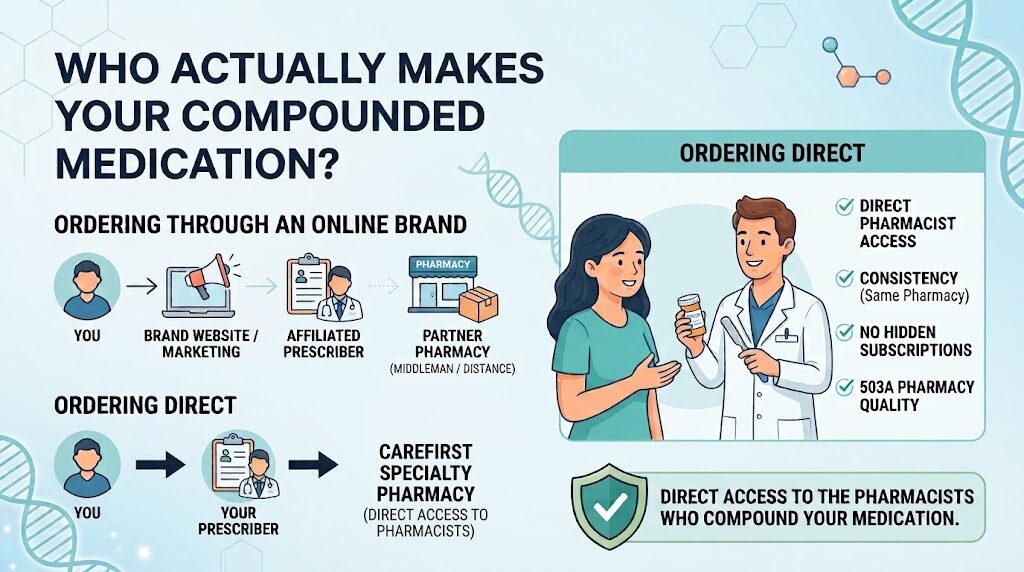
Who actually makes your compounded medication?
Many online health brands never touch the medication they sell you. Here's how that model works, what it means for your prescription, and what changes when you order straight from the pharmacy that compounds it.
2026-07-24
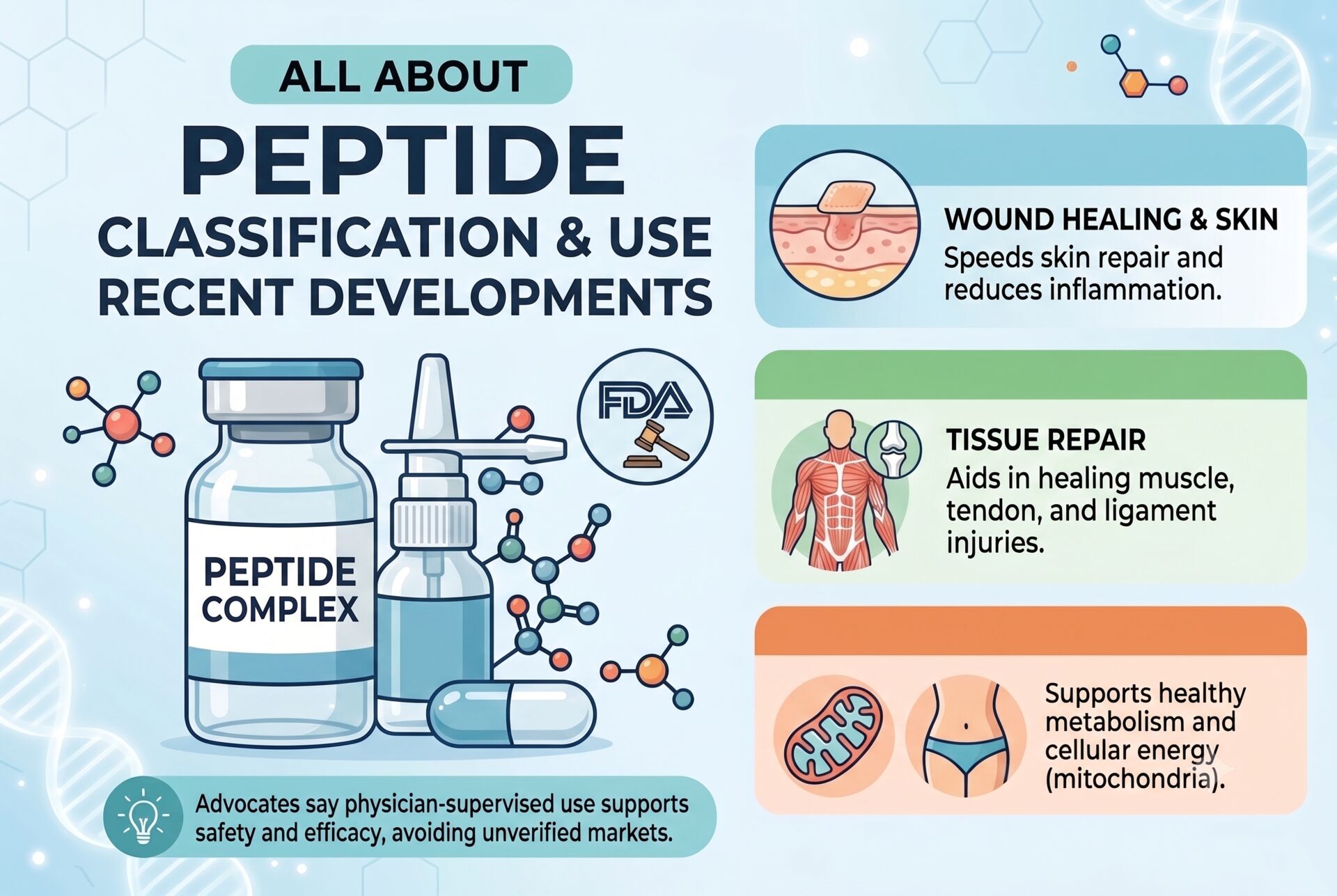
Recent Developments on Peptide Use & Approval
Peptides, including BPC-157, have been trapped for many years in a gray area between official approval and the unregulated market for supplements and experimental drugs. However, a group of independent advisers to the FDA has recently voted on reclassifying BPC-157 and three other peptides.
2018-02-20
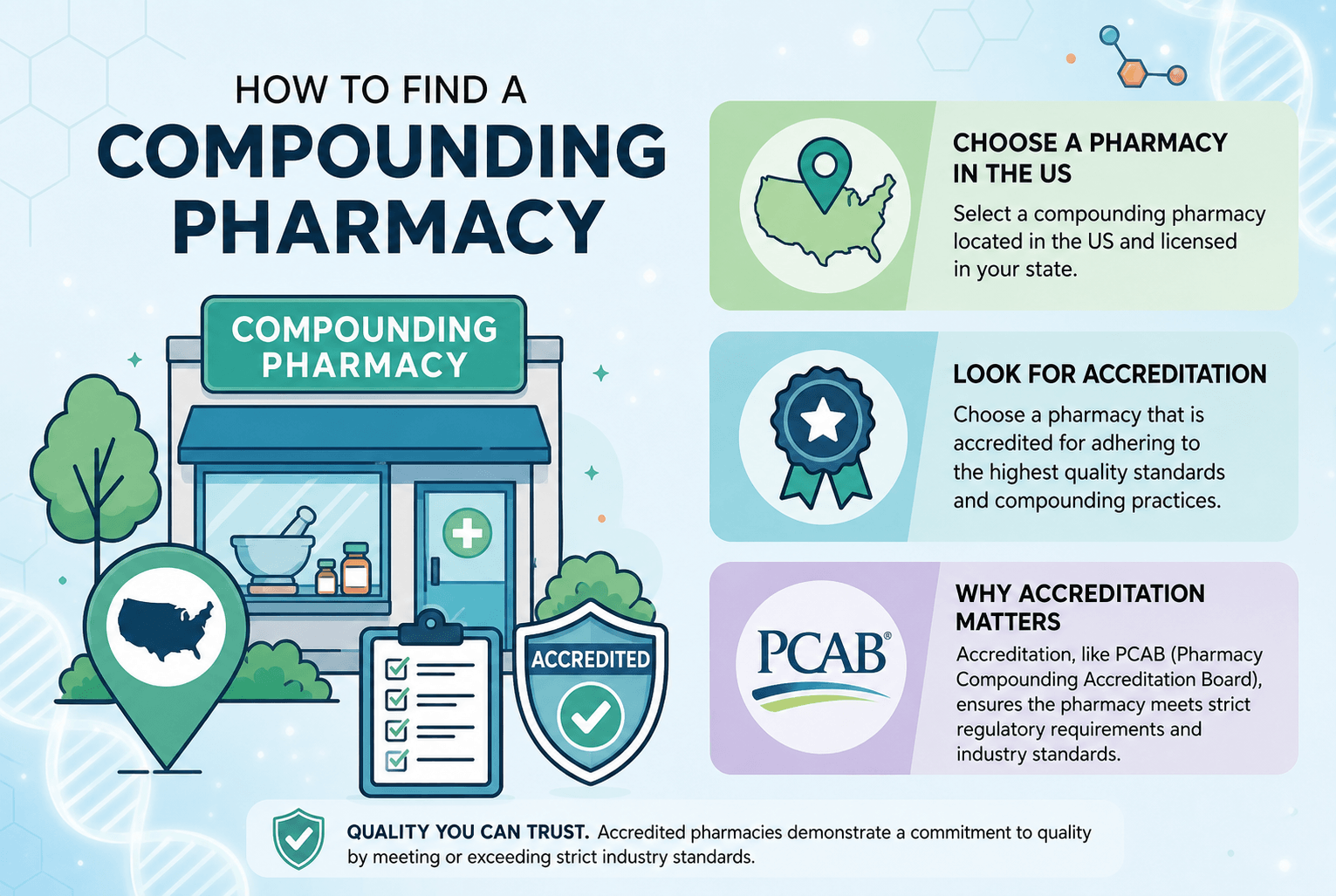
How to Find a Compounding Pharmacy
It's important to choose a compounding pharmacy located in the US and specifically who's licensed in your state. You also want to carefully select a compound pharmacy that is accredited for adhering to the highest quality standards and compounding practices. An accreditation, like PCAB, Pharmacy Compounding Accreditation Board provides a process to review a compounding pharmacy’s ability to meet strict regulatory requirements and standards set by accreditation organization. It demonstrates the pharmacy’s commitment to quality by meeting/or exceeding strict industry standards.