
No reviews yet. Be the first to share your experience!
Eflornithine / Metformin Cream Compounded
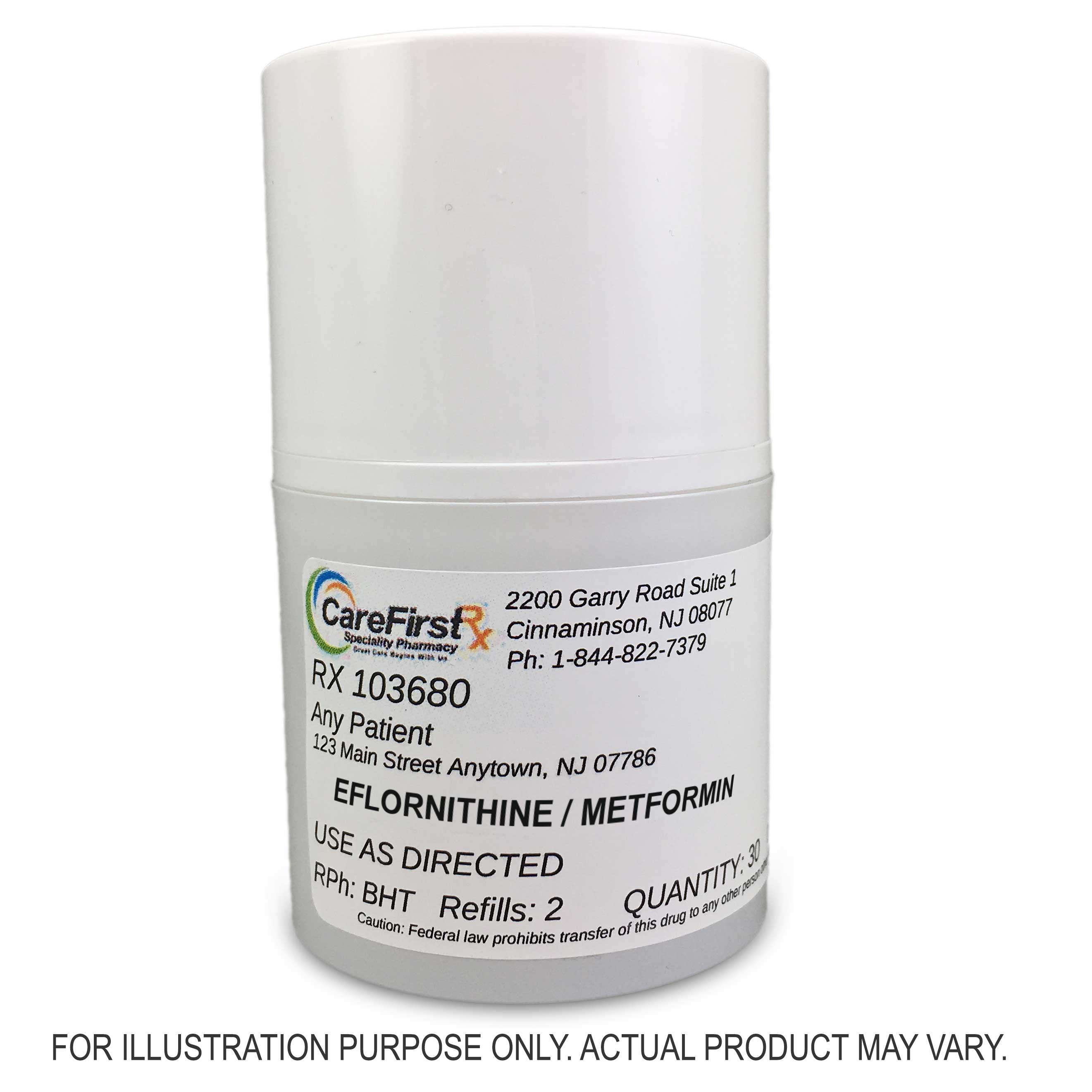
Topical eflornithine and metformin represent an exciting convergence of dermatologic science and pharmaceutical innovation. You may buy Eflornithine / Metformin Cream Compounded from CareFirst Specialty Pharmacy with a valid prescription from your prescriber.
Start by selecting a form for your price
StrengthSelect a form first
QuantitySelect a strength first
Price: as low as $70.00
Please Note: Due to market volatility, prices are subject to change. Please contact us for the most current pricing.
Ready to Move Forward?
Select the action that best fits how you'd like us to handle the prescription.
This medication requires a prescription.
To process your order we will require a prescription from you or your Prescriber. We will only compound and dispense upon receipt of a valid patient specific prescription.
- Your prescriber can mail or fax in the prescription
- You can mail in the original prescription
- We can contact your prescriber for you
- You can transfer your prescription from another pharmacy

Are you a licensed Prescriber?
Choose the option that best fits how you’d like to send scripts or connect with us.
Fax Your Prescription
Fax (800) 786-1405 or (844) 922-7379 and we’ll process it right away.
Phone In
Call our pharmacists at (844) 822-7379 with prescription details.
Request More Info
Complete the prescriber form and we’ll follow up quickly.
Email Our Team
csr@cfspharmacy.com for questions, refills, or status updates.

Looking for a Different Strength?
Pharmacy Info
We are a nationally accredited PCAB compounding pharmacy and a .Pharmacy verified website. A verified .Pharmacy website designation ensures our patients and prescribing partners that our website is verified and safe.
https://safe.pharmacy/buy-safely/?url=cfspharmacy.pharmacy
Drug Description
Actual product image may vary.
Product Info
Topical eflornithine and topical metformin are emerging as innovative, targeted therapies that influence follicular activity through distinct molecular pathways.
Active Ingredients & How They Work
Eflornithine — Originally developed as an antiparasitic medication, but later found dermatologic utility due to its ability to inhibit ornithine decarboxylase (ODC) — a key enzyme in the biosynthesis of polyamines such as putrescine, spermidine, and spermine. These polyamines regulate cellular proliferation and differentiation, particularly within actively dividing tissues like hair follicles. Acts enzymatically by blocking ODC and depleting polyamine availability — directly curtailing follicular matrix activity.
Metformin — A biguanide class insulin-sensitizing agent, has long been used to treat hyperglycemia in type 2 diabetes mellitus. Its mechanism centers on the activation of AMP-activated protein kinase (AMPK), which reduces hepatic glucose output and enhances peripheral insulin uptake. Acts metabolically via AMPK activation to suppress anabolic signaling through mTOR — improving the local hormonal and inflammatory milieu.
🧪 How It Works
By irreversibly inhibiting ODC, eflornithine reduces polyamine synthesis, slowing matrix keratinocyte division and delaying the initiation of new hair shafts. This mechanism selectively reduces the rate of terminal hair growth without damaging existing follicles.
Clinical Evidence
Clinical studies of topical eflornithine cream have demonstrated statistically significant reductions in hair growth after 6 to 8 weeks of twice-daily use. Improvements are typically maintained with continuous application, and adverse effects are limited to mild erythema, burning, or stinging sensations.
In PCOS, metformin also exerts endocrine effects by lowering circulating insulin levels, thereby reducing ovarian androgen synthesis and restoring more physiologic gonadotropin signaling.
Typical Compounding Concentrations
- Eflornithine HCl: 13.9% to 15% in hydrophilic base
- Metformin HCl: 3% to 10%, with 5% being most studied in dermatologic settings
What to Expect
Patients using topical eflornithine or metformin should be advised that results develop gradually, typically within two to three hair cycles. Consistency of use is key — skipping applications can allow follicles to return to their natural growth rate. When used as prescribed, these agents can reduce the frequency of hair removal and improve skin texture over time.
Their complementary mechanisms — enzymatic inhibition and metabolic modulation — address the multifactorial nature of hair growth regulation at its root.
Active Ingredients
Eflornithine
Metformin
Directions
Consult your prescriber.
Instructions
Use the medication as prescribed by your doctor. The information provided is not intended to cover all possible uses. This information is generalized and not intended as specific medical advice. If you have questions about the use of your prescription, please contact your prescriber.
Shipping
Troches and suppositories require refrigeration (ice packs) and will incur an extra charge of $19.95 per order.
Reviews
Customer Reviews
No reviews yet
Leave a Review
We are a nationally accredited PCAB compounding pharmacy and a .Pharmacy verified website. A verified .Pharmacy website designation ensures our patients and prescribing partners that our website is verified and safe.
https://safe.pharmacy/buy-safely/?url=cfspharmacy.pharmacy
Actual product image may vary.
Topical eflornithine and topical metformin are emerging as innovative, targeted therapies that influence follicular activity through distinct molecular pathways.
Active Ingredients & How They Work
Eflornithine — Originally developed as an antiparasitic medication, but later found dermatologic utility due to its ability to inhibit ornithine decarboxylase (ODC) — a key enzyme in the biosynthesis of polyamines such as putrescine, spermidine, and spermine. These polyamines regulate cellular proliferation and differentiation, particularly within actively dividing tissues like hair follicles. Acts enzymatically by blocking ODC and depleting polyamine availability — directly curtailing follicular matrix activity.
Metformin — A biguanide class insulin-sensitizing agent, has long been used to treat hyperglycemia in type 2 diabetes mellitus. Its mechanism centers on the activation of AMP-activated protein kinase (AMPK), which reduces hepatic glucose output and enhances peripheral insulin uptake. Acts metabolically via AMPK activation to suppress anabolic signaling through mTOR — improving the local hormonal and inflammatory milieu.
🧪 How It Works
By irreversibly inhibiting ODC, eflornithine reduces polyamine synthesis, slowing matrix keratinocyte division and delaying the initiation of new hair shafts. This mechanism selectively reduces the rate of terminal hair growth without damaging existing follicles.
Clinical Evidence
Clinical studies of topical eflornithine cream have demonstrated statistically significant reductions in hair growth after 6 to 8 weeks of twice-daily use. Improvements are typically maintained with continuous application, and adverse effects are limited to mild erythema, burning, or stinging sensations.
In PCOS, metformin also exerts endocrine effects by lowering circulating insulin levels, thereby reducing ovarian androgen synthesis and restoring more physiologic gonadotropin signaling.
Typical Compounding Concentrations
- Eflornithine HCl: 13.9% to 15% in hydrophilic base
- Metformin HCl: 3% to 10%, with 5% being most studied in dermatologic settings
What to Expect
Patients using topical eflornithine or metformin should be advised that results develop gradually, typically within two to three hair cycles. Consistency of use is key — skipping applications can allow follicles to return to their natural growth rate. When used as prescribed, these agents can reduce the frequency of hair removal and improve skin texture over time.
Their complementary mechanisms — enzymatic inhibition and metabolic modulation — address the multifactorial nature of hair growth regulation at its root.
Eflornithine
Metformin
Consult your prescriber.
Use the medication as prescribed by your doctor. The information provided is not intended to cover all possible uses. This information is generalized and not intended as specific medical advice. If you have questions about the use of your prescription, please contact your prescriber.
Troches and suppositories require refrigeration (ice packs) and will incur an extra charge of $19.95 per order.
Customer Reviews
No reviews yet
Leave a Review
Related Articles
Learn more about Eflornithine / Metformin Cream Compounded from our pharmacy team.
2026-06-02
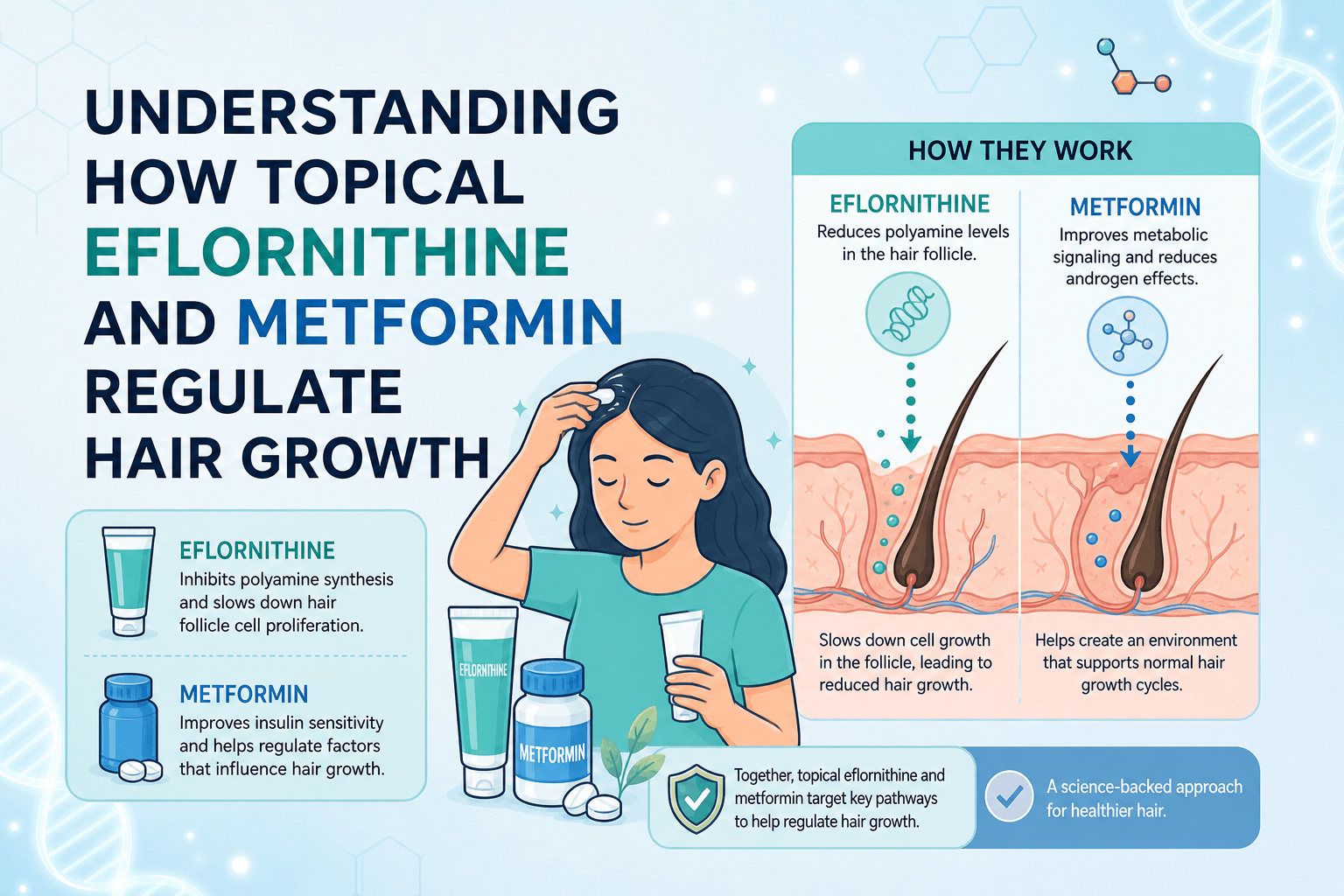
Understanding How Topical Eflornithine and Metformin Regulate Hair Growth
Topical eflornithine and topical metformin are emerging as innovative, targeted therapies that influence follicular activity through distinct molecular pathways. This article reviews their mechanisms of action, clinical relevance, and formulation considerations for modern dermatologic and compounding practice.